Everyone deletes survey emails. That’s the honest starting point for anyone writing one.
Your reader has been asked to rate a support ticket, score a delivery, and star a driver already this week. By the time your feedback request lands, “how did we do?” has been worn down into background noise. The email isn’t competing with other emails — it’s competing with a reflex.
Which is why the feedback requests that actually work almost never look like surveys. They look like a question from a person. Below are 12 real feedback request emails from Loom, Semrush, Buffer, Apollo, Typeform, Notion, Slack, Customer.io, Calendly, Fiverr, and Adobe — grouped by the five jobs a feedback email actually does, each annotated with the specific pattern you can lift.
TL;DR — what makes a feedback request email work
- Invert the ask. The best subject lines don’t request data, they offer attention: “How are we doing?”, “Adobe wants to hear from you.” The reader is being listened to, not measured — and that single reframe is what gets the open.
- Name a human, not a company. “Quick feedback?” from Joel at Buffer outperforms “Take our survey” from a research alias, because people answer people. Send from a real name and reply-to a real inbox.
- Match the ask size to the moment. One question in the body beats a linked 12-question form. Every extra field between the reader and “done” is a place to quit — so ask for the smallest useful answer.
What is a feedback request email?
A feedback request email is a message asking a customer to share their experience of your product — through a rating scale, a survey link, or an open-ended reply. It’s how teams turn scattered opinion into something they can act on.
The category covers three distinct jobs that often get lumped together:
- NPS and satisfaction surveys measure sentiment on a scale, tracked over time. They tell you what the number is.
- Qualitative feedback requests ask an open question and invite a reply. They tell you why the number is what it is.
- Research and product-direction surveys recruit users into shaping what you build next. They tell you what to do about it.
The distinction matters because the three have different economics. An NPS score is only useful in aggregate, so it needs volume — which means the ask has to be nearly frictionless. A qualitative reply is useful as a sample of one, so it can afford to ask more. Sending a 15-question research survey to your entire base with an NPS subject line gets you the worst of both: too long to complete, too shallow to learn from.
The 12 examples below are sorted by which job they’re doing. Steal the format that matches the answer you actually need.
NPS and satisfaction check-ins
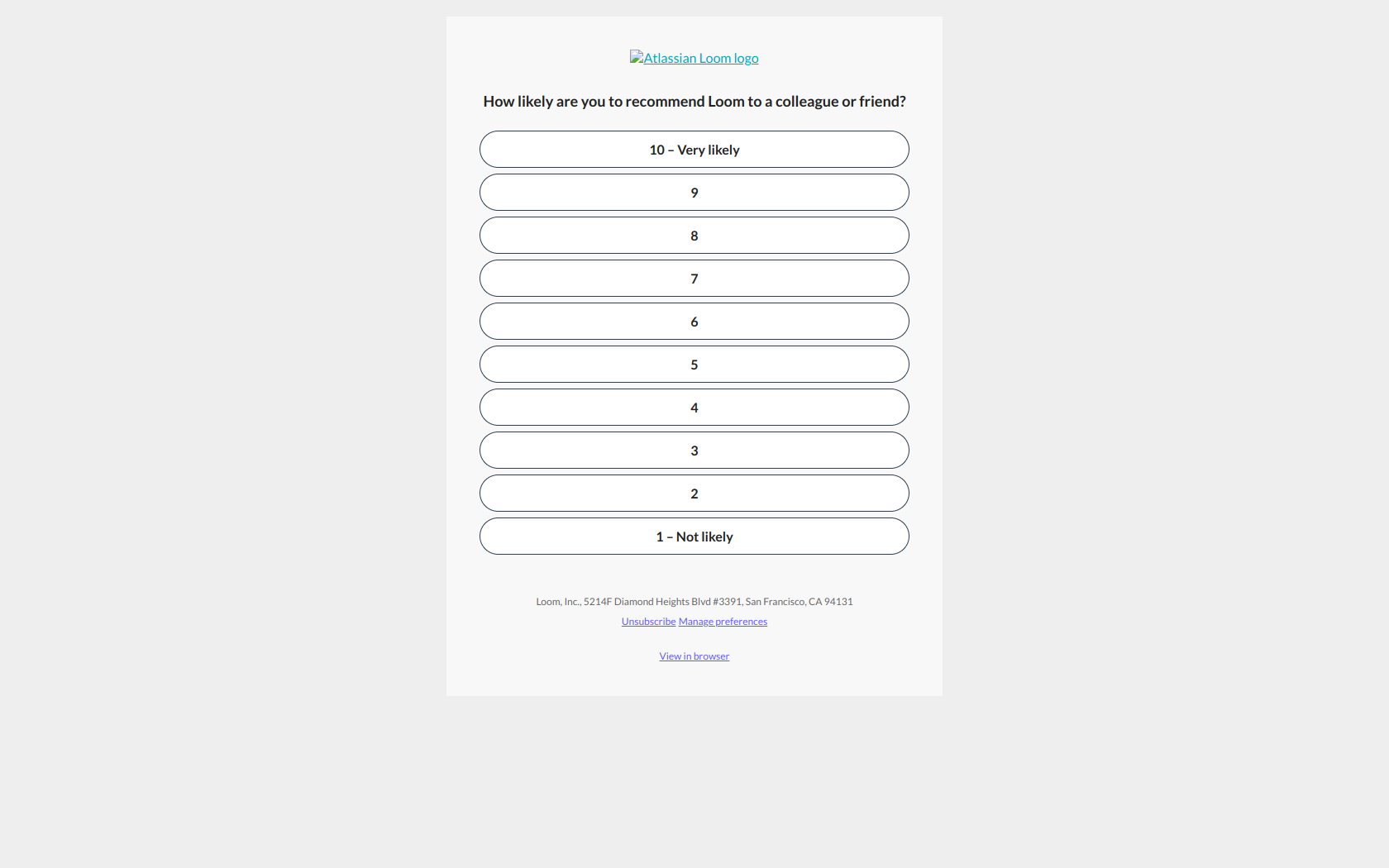
Subject line: How are we doing?
Loom’s NPS email is four words long in the subject and carries no survey vocabulary at all. No “rate your experience,” no “2-minute survey,” no “your feedback matters.” Just a question one person asks another, sent from “The Loom Team.”
That plainness is doing real work. “How are we doing?” reads as a relationship check-in rather than a data collection exercise, and it lands before the reader’s survey-fatigue reflex has anything to fire at. There’s nothing in the subject line that pattern-matches to the thing they’ve trained themselves to delete.
The pattern: ask how you’re doing, not how they’d rate you. Flipping the direction of the question turns compliance into conversation. It costs nothing to implement and it works precisely because it doesn’t announce itself as an NPS survey — which is what most of your competitors’ subject lines do.
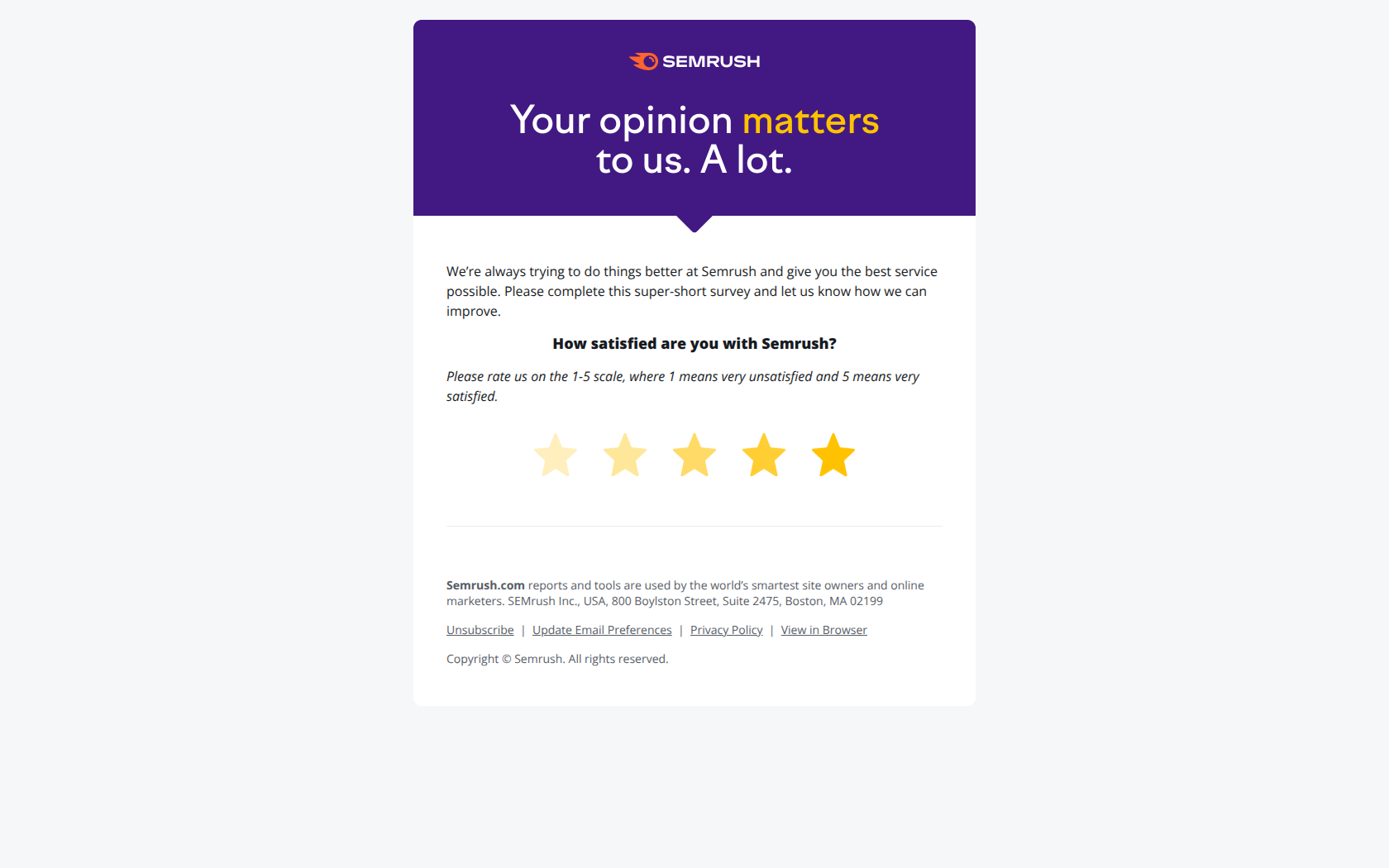
Subject line: Be honest… what do you really think about us!? 🤔
Semrush does the opposite of Loom and gets to the same place. Instead of stripping the survey framing out, it names the thing the reader is already thinking: that these emails are theater, that nobody reads the responses, that “your feedback matters” is a form letter.
“Be honest… what do you really think about us!?” concedes the point before the reader can make it. The ellipsis and the emoji signal that a human wrote this and expects a real answer — possibly an unflattering one. An email that invites criticism is, paradoxically, more credible than one that assumes goodwill.
The pattern: name the objection before the ask. When you’re sending into a channel the reader distrusts, acknowledging the distrust is more persuasive than working around it. This works especially well for NPS, where the reader’s default assumption is that the score disappears into a dashboard nobody looks at.
Open-ended asks that read like a person
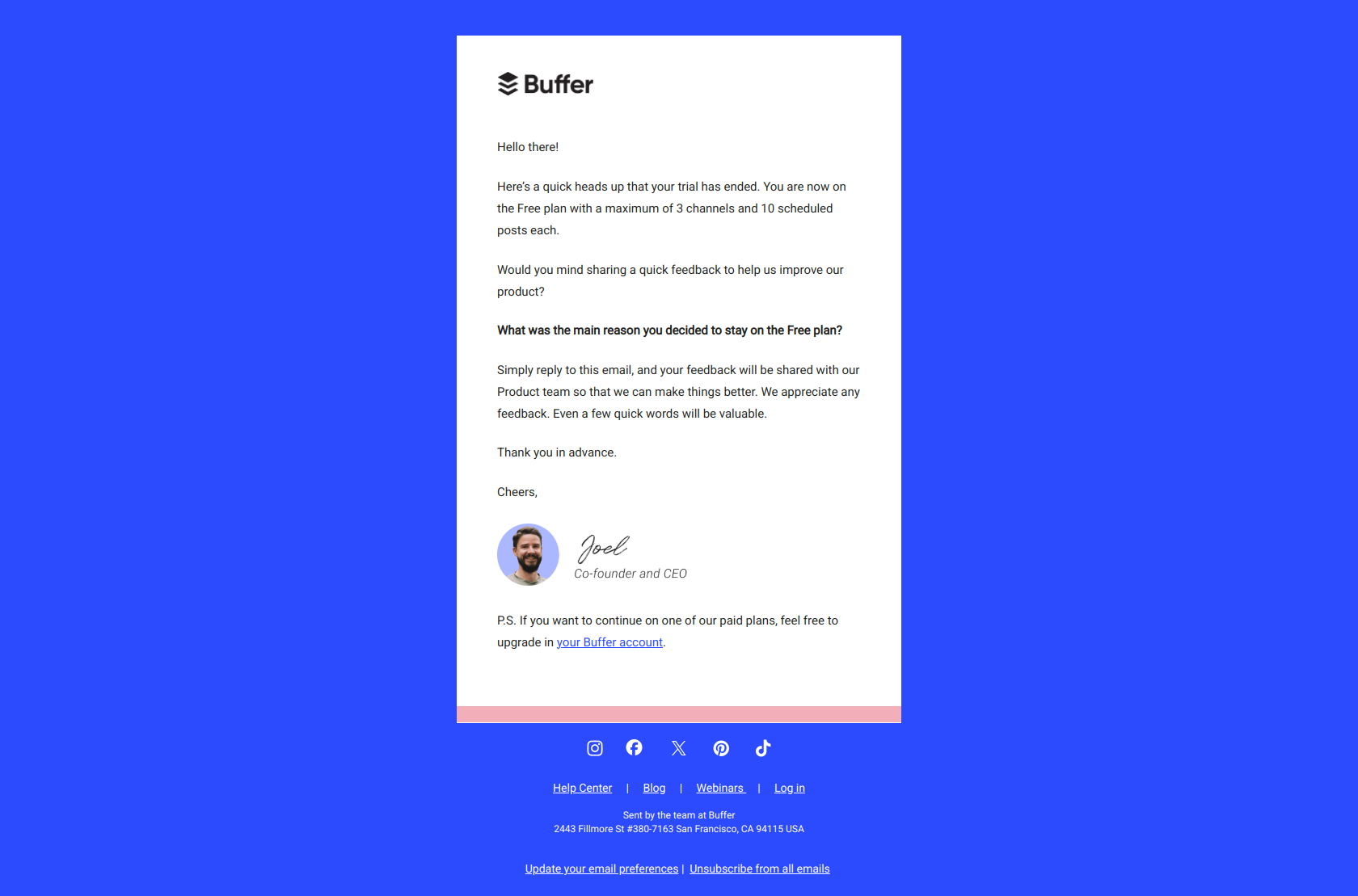
Subject line: Quick feedback?
Two words, a question mark, and — critically — a sender line that reads “Joel from Buffer.” Not Buffer Research. Not The Buffer Team. Joel.
That’s the whole email’s strategy. The reader isn’t being asked to feed a corporate research pipeline; they’re being asked to help someone out. Those are different requests with very different reply rates, and the difference is carried almost entirely by the From field. The “quick” is doing work too — it’s a promise about the size of the ask, and it makes the email feel answerable in the ten seconds the reader has right now.
The pattern: name the beneficiary as a human, not the company. This matters most on churn-risk and post-trial emails, where defensiveness runs highest and a corporate sender reads as damage control. A person asking a question gets an answer; a brand asking for data gets archived.
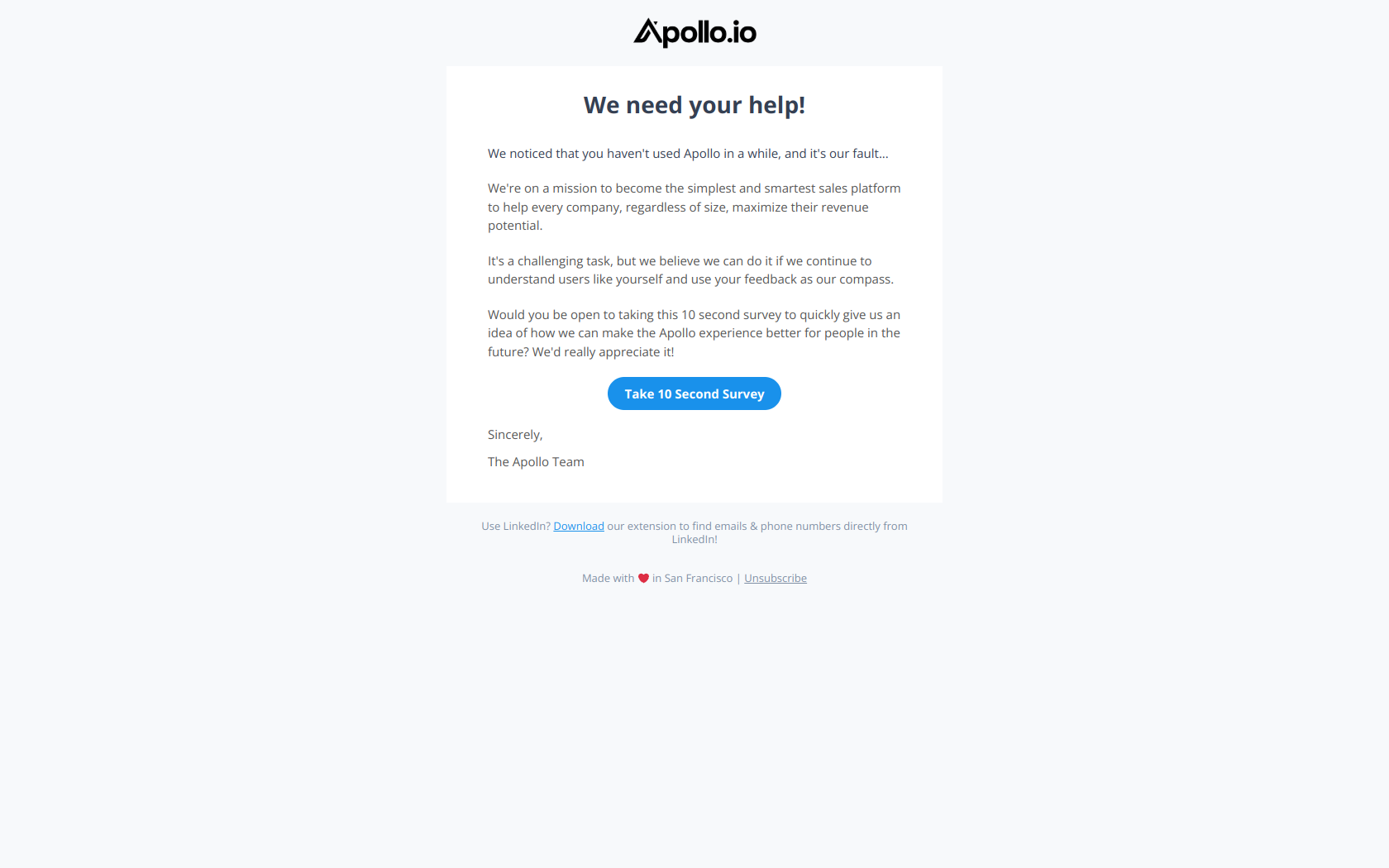
Subject line: quick question
Apollo’s is the most stripped-down email in this entire list: lowercase, unpunctuated, indistinguishable from a note a colleague fires off between meetings. There’s no branding in the subject, no capitalization, no hint that it came from a marketing system.
It looks like an email from a peer because that’s exactly the association it’s borrowing. “quick question” is what a real person types when they want thirty seconds of your time. The plain-text styling reinforces it — nothing about the email signals “campaign,” which is what earns it the open from a user who has stopped opening Apollo’s other emails.
The pattern: strip the corporate framing entirely when you’re writing to disengaged users. If someone has tuned out your branded emails, another branded email won’t reach them. The trade-off is real, though: this only works if a reply actually lands in a human’s inbox. Mimic a personal email and then auto-respond like a robot and you’ve spent trust you can’t earn back.
Product-direction and research surveys
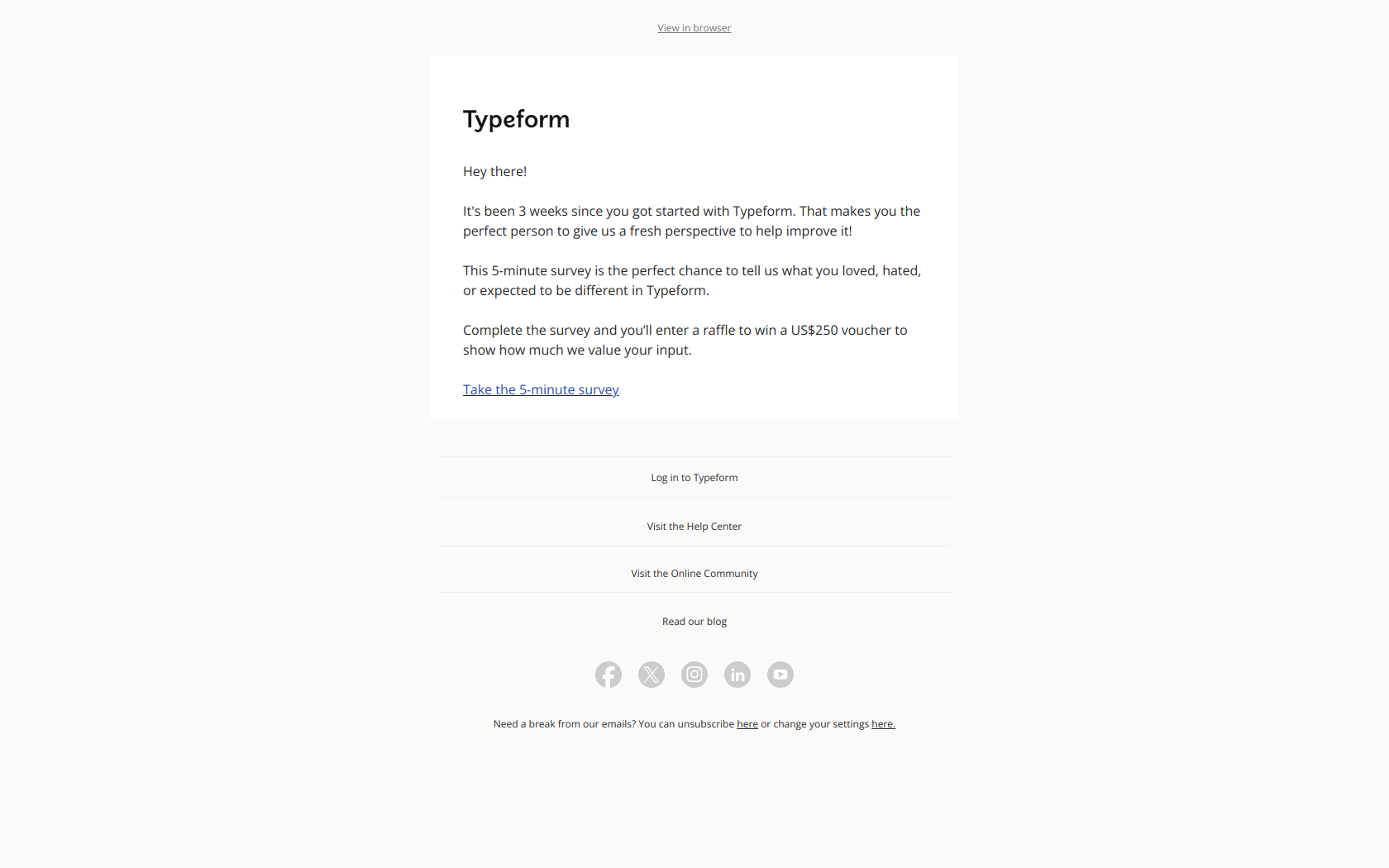
Subject line: What do you think of Typeform so far?
The “so far” is the entire subject line. It places the reader at a specific moment — early, still forming an opinion, not yet a verdict — and asks for a snapshot rather than a judgment.
That’s a meaningfully easier question to answer. “Rate your experience” implies you should have a settled, defensible opinion. “What do you think so far?” invites a half-formed one, which is what new users actually have. It also quietly signals that the relationship is expected to continue, which makes the feedback feel consequential rather than terminal.
The pattern: invite an opinion, don’t demand data. Ask a direct question a user can answer honestly from where they’re standing, rather than one that presumes more certainty than they have. Timing-wise this belongs shortly after activation — early enough that first impressions are still sharp, late enough that they’ve formed.
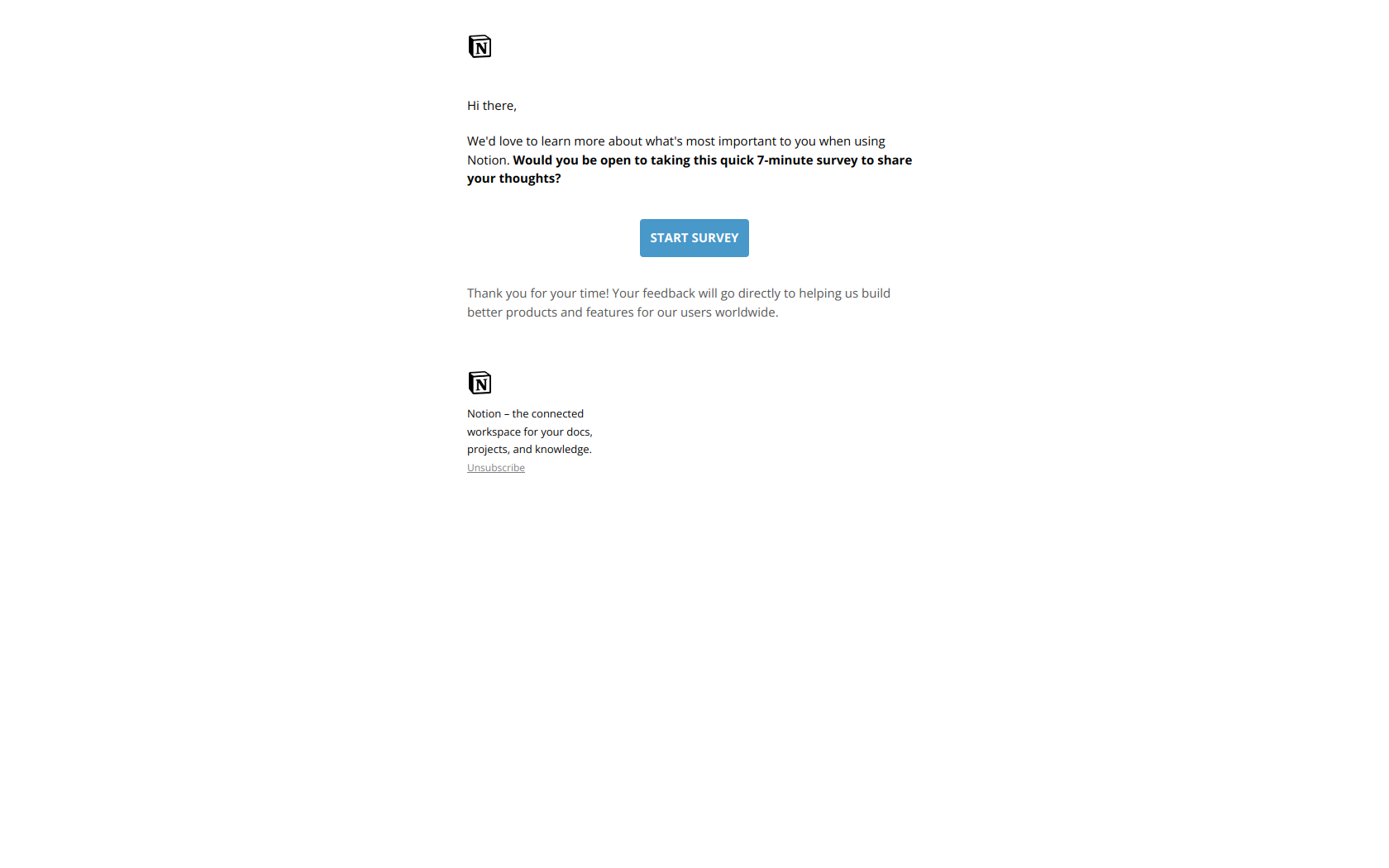
Subject line: Share your thoughts with the Notion Research Team
Notion names a specific destination for the answer: the Research Team. Not a form, not a dashboard, not a general-purpose feedback address — a group of people whose job is to read this.
That specificity is the persuasion. The unspoken objection to every survey is “this goes nowhere,” and naming the humans on the other end is a concrete answer to it. “Share your thoughts” rather than “complete our survey” pushes the same direction: the reader is contributing a perspective, not filling a quota.
The pattern: agency before obligation. Tell the reader who reads the response and what it changes. A survey that can point at a real team — and, ideally, a real decision the input feeds — converts better than an anonymous form, because it answers the “why bother?” question before it gets asked.
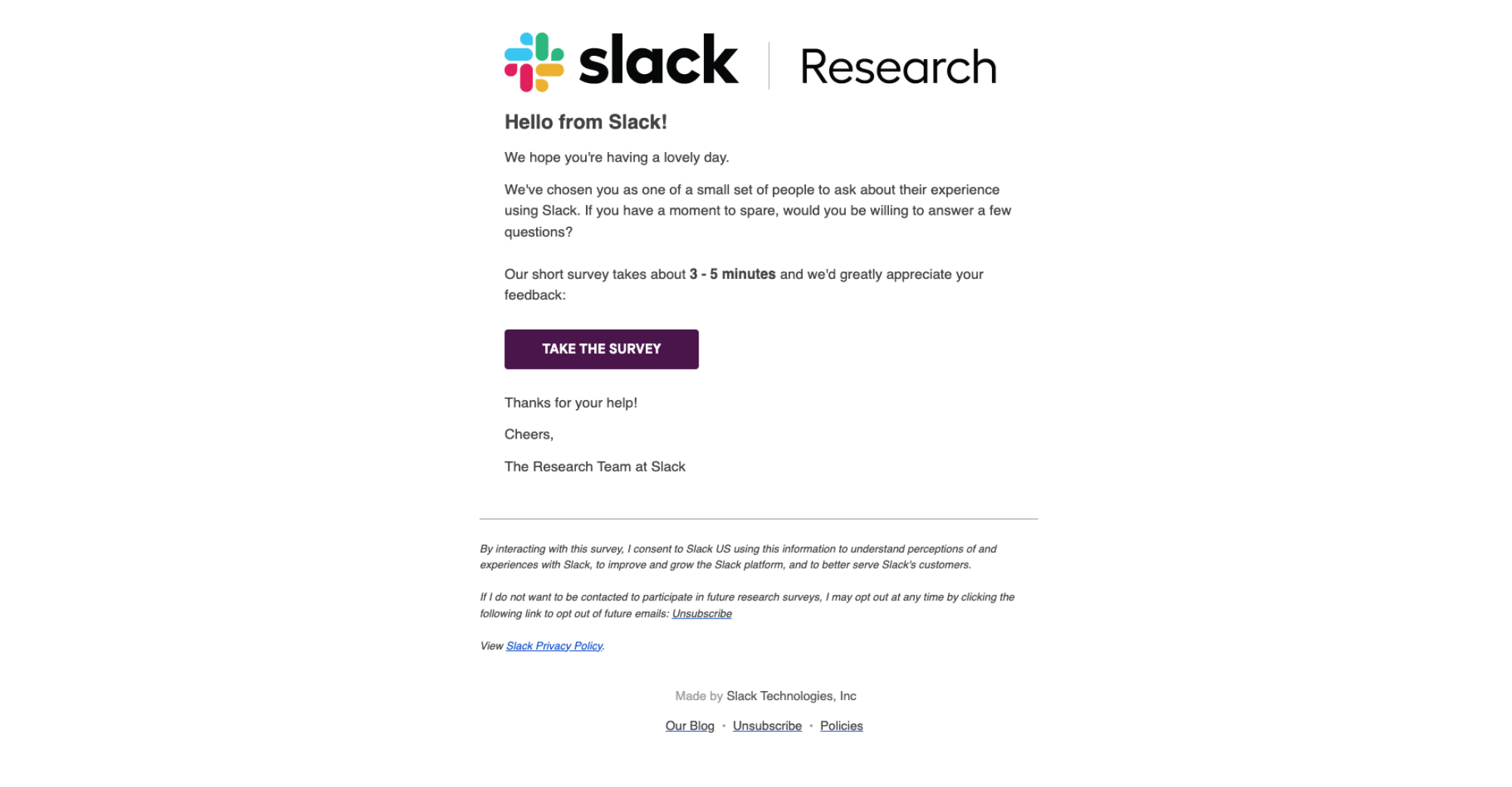
Subject line: Chance to provide feedback and help us improve your experience of Slack!
Slack’s subject line is the longest here, and it earns the length by putting the outcome in it: help us improve your experience of Slack. Not our roadmap, not our metrics — your experience.
The framing makes participation self-interested in a legitimate way. The reader isn’t donating time to Slack’s research budget; they’re voting on the product they use every day. That’s the argument the email has to win, since Slack is asking for several minutes from people who use the product constantly and have opinions worth collecting.
The pattern: put the reader’s benefit in the subject line, not the company’s. “Help us improve” works, but “help us improve your experience” works better — it names who gets the upside. When the ask is long, the payoff has to be visible before the click.
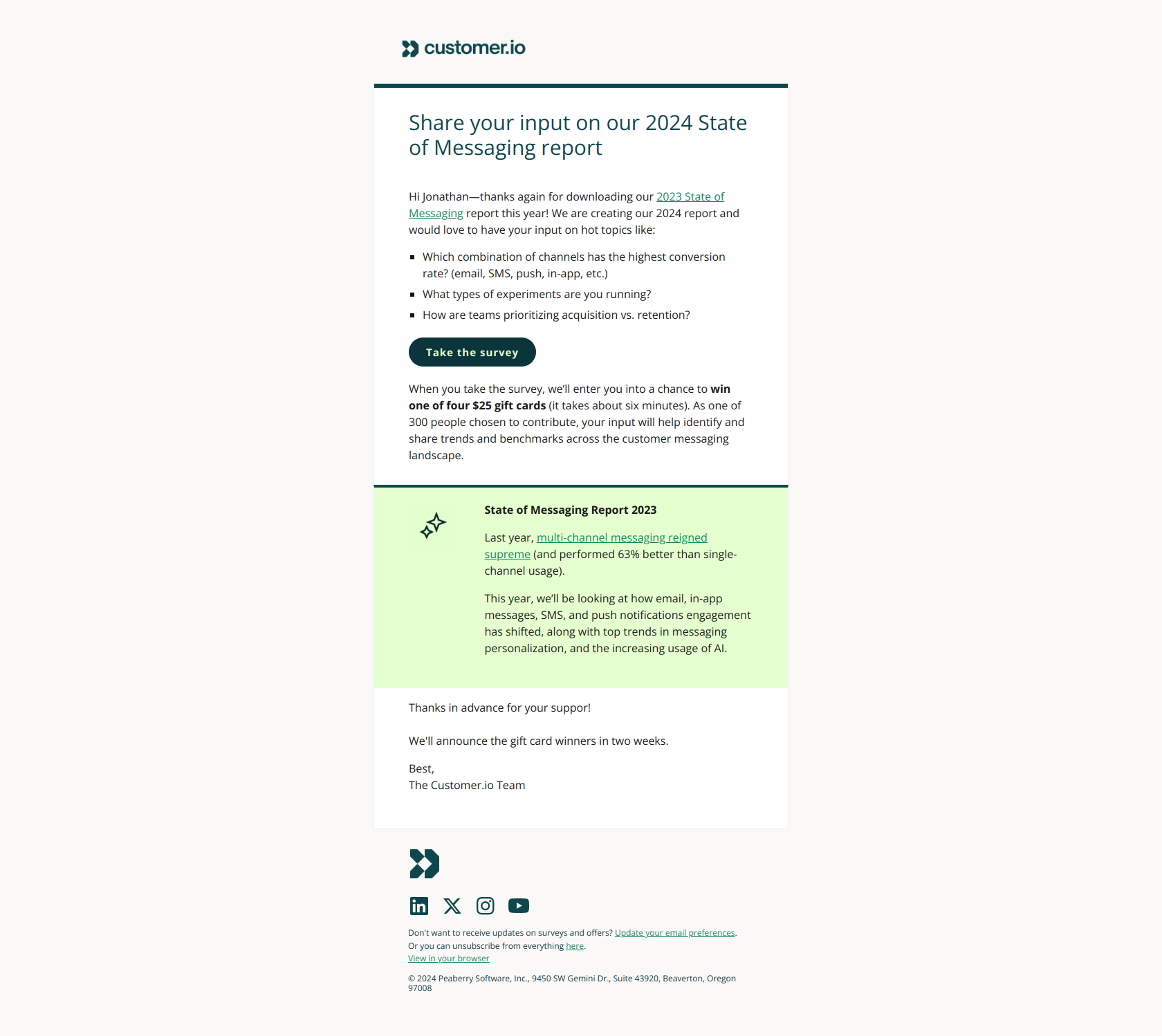
Subject line: You’re invited to contribute - 2024 State of Messaging
Customer.io doesn’t send a survey. It sends an invitation to co-author an industry report.
The mechanics are identical — questions, a form, aggregated answers — but the frame is inverted. “You’re invited to contribute” makes the reader a source rather than a subject, and the State of Messaging report gives the data somewhere public to land. There’s a second payoff built in: contributors get to see where they stand against their peers, which is something no internal NPS survey can offer.
The pattern: reframe the ask as access, not extraction. If you can attach the survey to a published output — a benchmark, an industry report, a data study — participation becomes a byline instead of a chore. This is the highest-effort pattern here and the most durable: it produces the response data and a linkable asset.
Incentivized surveys
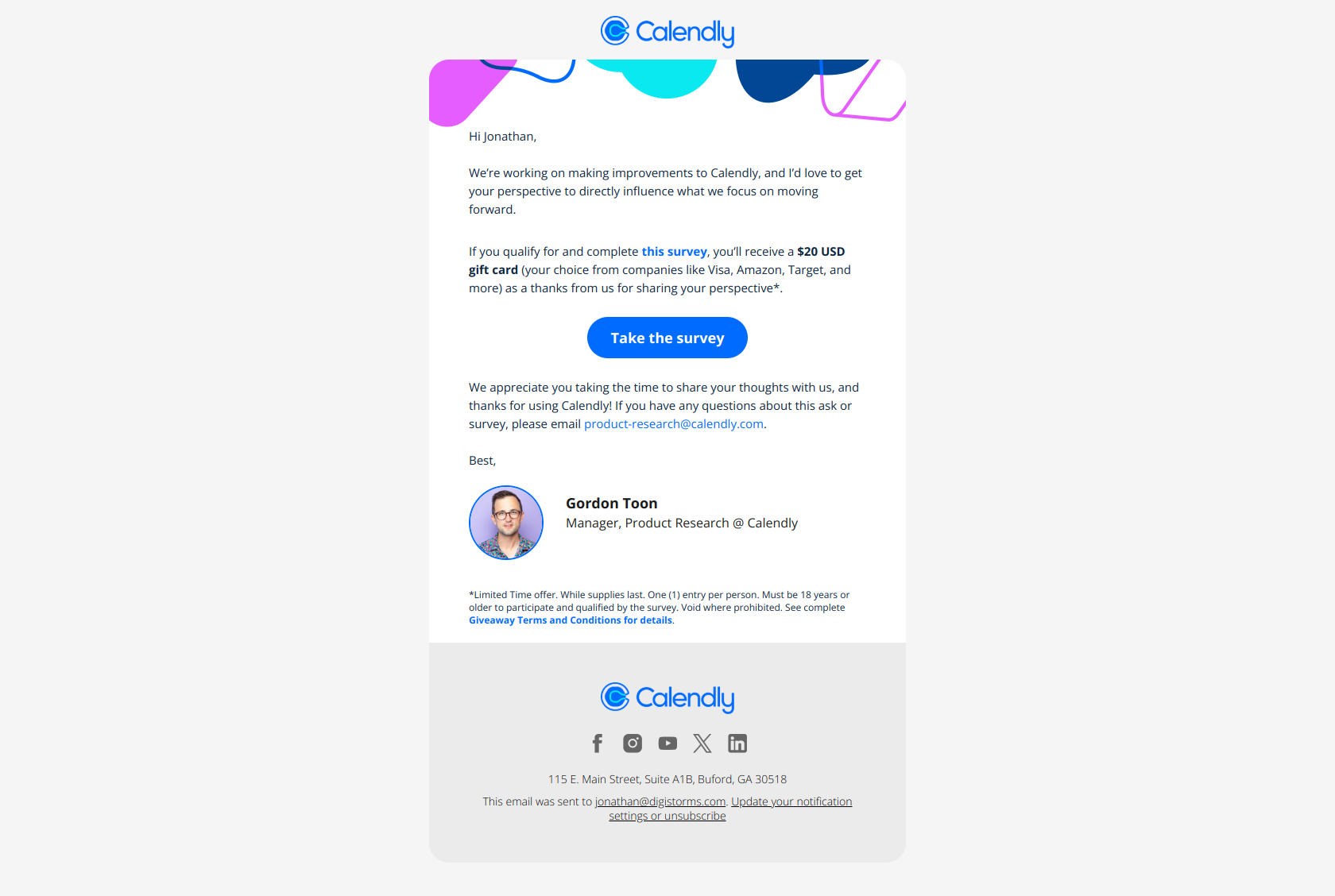
Subject line: Help us improve Calendly with your feedback and receive a $20 gift card
Calendly puts the incentive in the subject line — but notice the order. The ask comes first (“help us improve Calendly with your feedback”), the gift card second.
That sequence matters more than it looks. Lead with $20 and you’ve priced the reader’s opinion, attracting people who want the card and will click through the fastest path to claim it. Lead with the contribution and the incentive reads as a thank-you rather than a wage. Same reward, different respondent — and the second one gives you usable answers. The email is also signed by a real person, “Gordon @ Calendly,” which keeps a transactional-feeling offer human.
The pattern: put the incentive after the ask, never before. The gift card should feel like appreciation for input you’d have valued anyway. When the reward leads, you’re not running research — you’re buying clicks, and you’ll get data shaped accordingly.
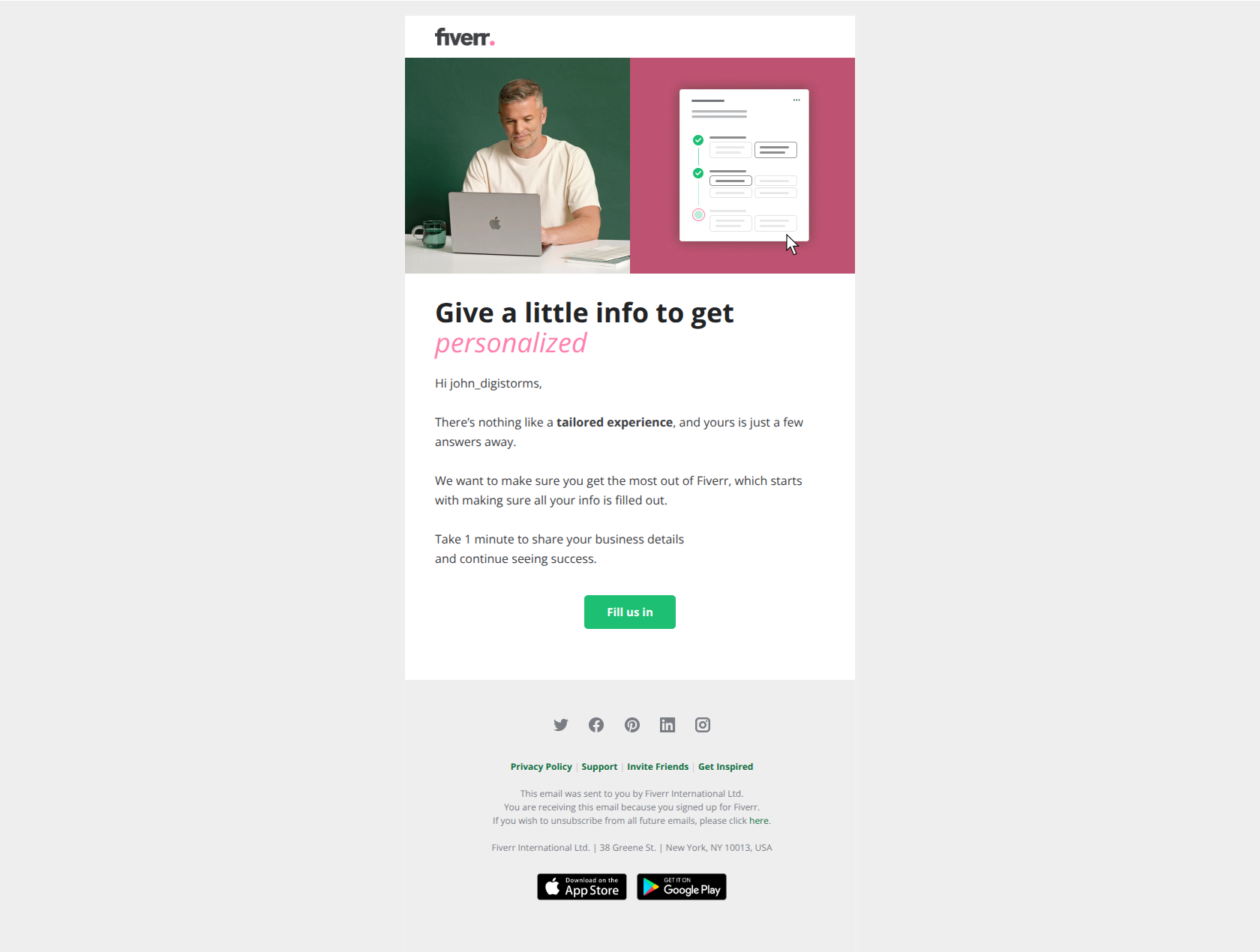
Subject line: We’d like to get to know you better
Fiverr’s subject line doesn’t mention feedback, a survey, or a reward. It proposes getting acquainted.
For a marketplace, that framing is well-chosen: knowing the user better plausibly produces better matches, so the survey’s benefit to the reader is real rather than rhetorical. “We’d like to get to know you better” reads as relationship-building, which sidesteps the “we need data from you” transaction the reader is braced for.
The pattern: position the ask as mutual benefit — but only when it’s true. This works for Fiverr because the answers feed personalization the user will actually feel. Use “get to know you” framing on a survey that only feeds an internal retention dashboard and you’ve written a check the product doesn’t cash, which is worse than being direct.
The follow-up reminder
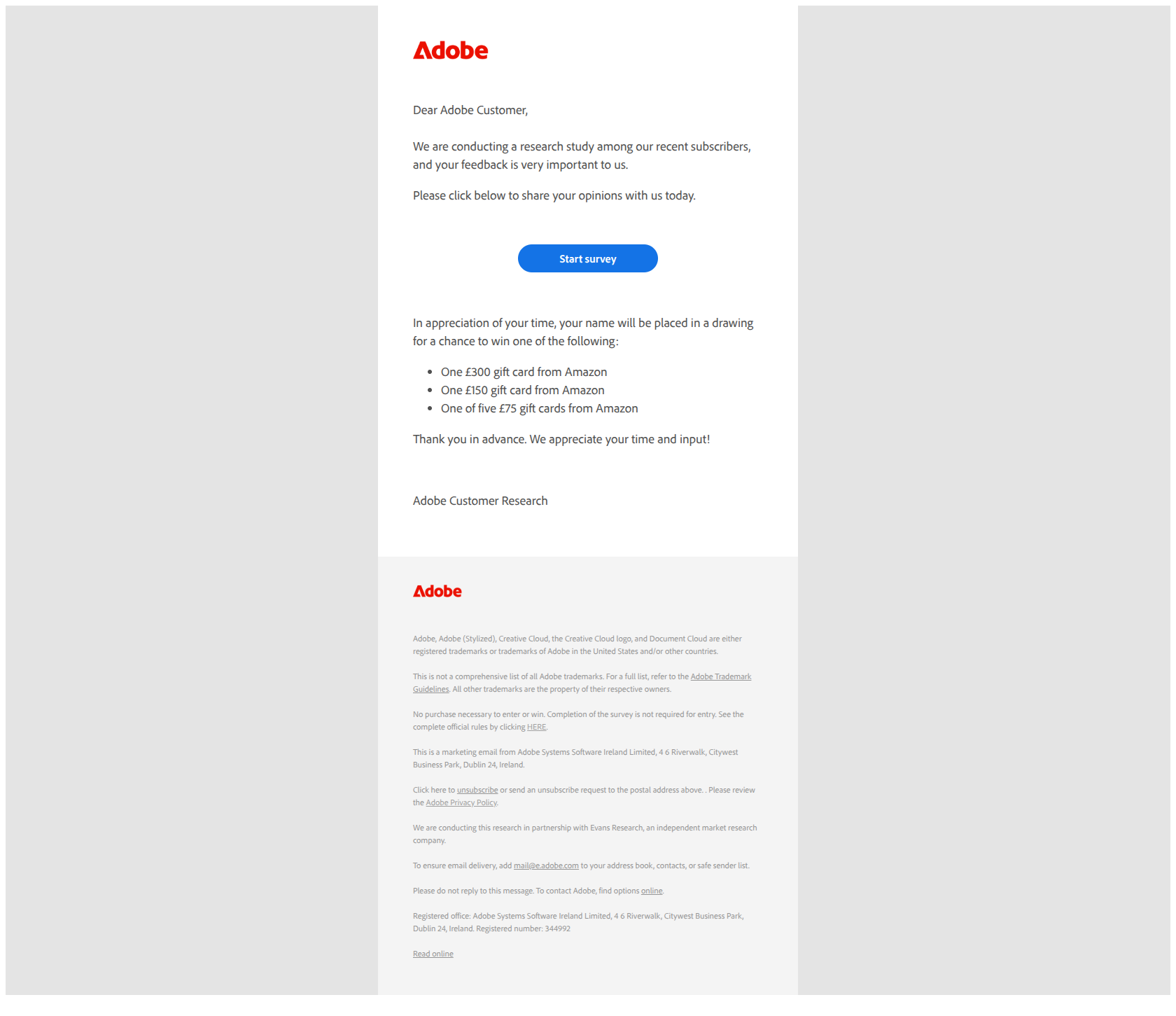
Subject line: Adobe wants to hear from you!
Adobe’s first send is a clean example of the invert-the-ask pattern, executed at enterprise scale. “Adobe wants to hear from you” centers the company’s desire to listen rather than the user’s obligation to respond — the burden moves from the reader to the sender.
The sender name reinforces it: “Adobe Customer Research” is an unglamorous, functional alias that reads as internal rather than promotional. For a company this size, that’s a deliberate choice — a marketing-flavored sender would make the same words read as a campaign.
The pattern: flip the burden of reciprocity. Frame participation as something you’re asking for, not something they owe. It’s the same move as Loom’s “How are we doing?”, and the fact that it shows up at both a startup and Adobe’s scale is a decent signal that it’s the closest thing to a default this category has.
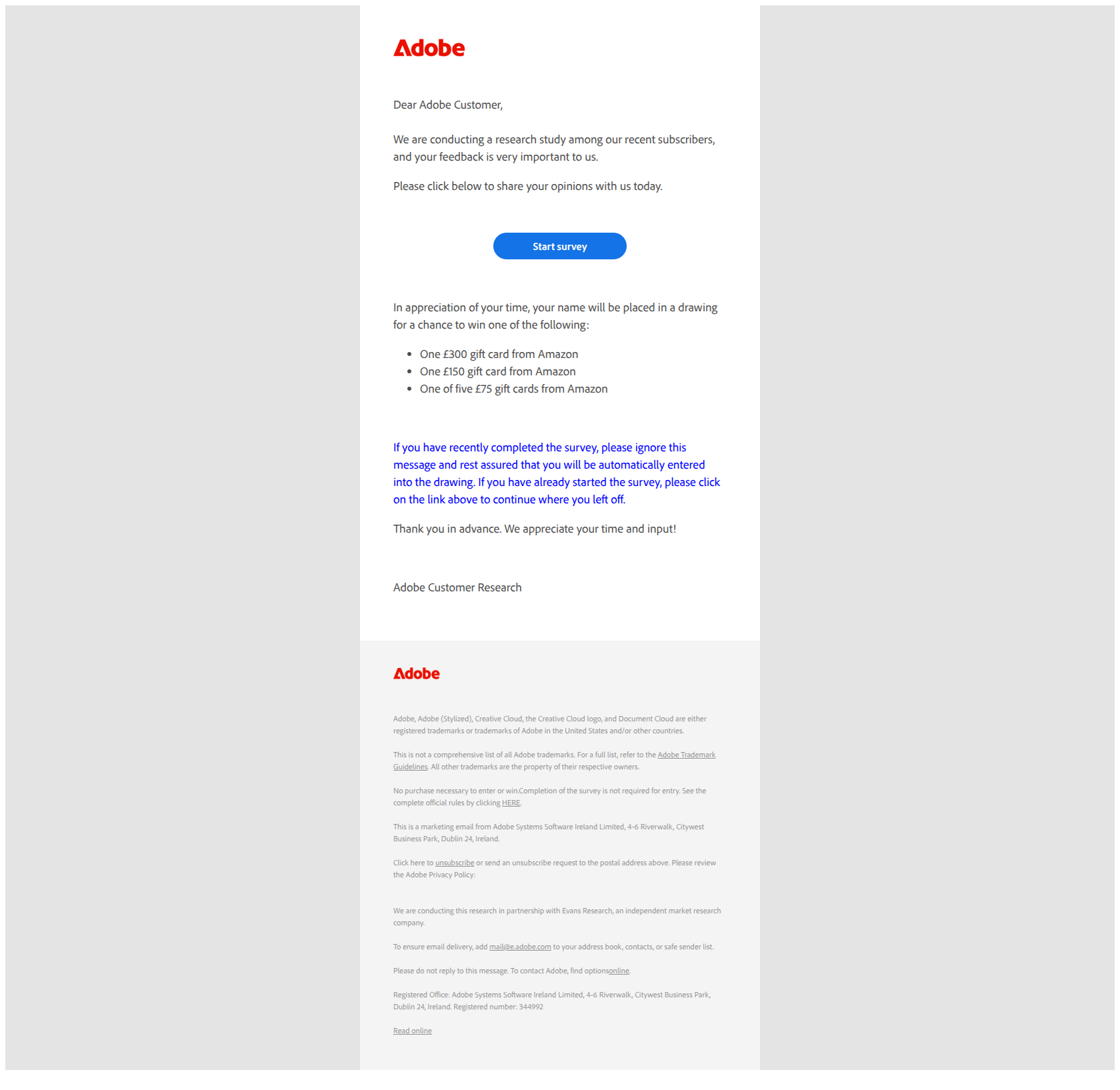
Subject line: REMINDER: Adobe wants to hear from you!
One week later, the same email with one word bolted on the front.
This is the most quietly instructive example in the list, because most teams treat the reminder as a rewrite and lose the thread. Adobe changed the prefix and nothing else. The reader who ignored the first send didn’t reject the message — most likely they never saw it, or saw it at a bad moment. Rewriting the subject line for send two throws away the recognition the first one built and starts the argument over.
The pattern: resend, don’t rewrite. Keep the original framing and mark it as a reminder. The second send is a scheduling fix, not a persuasion problem — the same envelope, a week later, catches everyone who was in a meeting the first time. One reminder is the norm; a second usually costs more unsubscribes than it earns responses.
The patterns behind every good feedback request
Across all 12 examples, the same handful of moves keep showing up:
| Job | The move | Examples |
|---|---|---|
| NPS / satisfaction | Invert the question, or name the distrust head-on | Loom, Semrush |
| Qualitative reply | Human sender, tiny ask, real reply-to | Buffer, Apollo |
| Research survey | Name who reads it and what it changes | Notion, Slack, Typeform, Customer.io |
| Incentivized survey | Ask first, reward second | Calendly, Fiverr |
| Reminder | Same email, one word added | Adobe |
Three principles unify them:
- The reader must feel listened to, not measured. Every subject line here that works does so by moving attention toward the customer. “How are we doing?” and “Adobe wants to hear from you” are the same sentence as “rate your experience” — with the direction reversed.
- Credibility comes from specificity. A named sender, a named research team, a named report. The generic version of each of these emails (“Your feedback matters!”) fails not because it’s untrue but because it’s unfalsifiable — there’s nothing in it a reader can check.
- The ask must fit the moment it interrupts. One question in the body, answerable in ten seconds, beats a linked form every time — unless you’ve given the reader a reason worth the click, like Customer.io’s report or Calendly’s card.
What every feedback request email should include
- A subject line that asks, not announces. A question the reader could answer in their head before they open. “How are we doing?” beats “Customer Satisfaction Survey — 2 minutes.”
- A human sender and a real reply-to. “Joel from Buffer” over “Buffer Research.” If you invite a reply, make sure a person receives it.
- One question, or one obvious click. Put the first question in the body where possible. If the survey must live elsewhere, tell the reader how long it takes before they click.
- A reason the answer matters. Name the team that reads it, the report it feeds, or the decision it shapes. “Your feedback matters” is not a reason.
- A single reminder, unchanged. Resend the same email with a REMINDER prefix about a week later. Don’t rewrite it, and don’t send a third.
If you want to see these feedback request emails in their natural habitat — full formatting, real inbox rendering, scrollable in browser — browse the DigiStorms email library, where every example above lives alongside hundreds more surveys, NPS asks, and open-ended questions from real SaaS companies.