Most trials don’t end with a “no.” They end with silence. A user signs up, pokes around once, gets pulled into something else, and never comes back — and the trial quietly expires without a decision ever being made. That’s trial drop-off, and email is the only channel you have left to interrupt it.
This is the trial-specific cousin of the broader re-engagement email program — except the clock is shorter, the stakes are sharper, and every email is racing a hard expiration date.
Below are 10 real trial drop-off recovery emails — from Pipedrive, Apollo, Loom, Calendly, Asana, Monday, Jira and more — mapped to the four moments where trials actually go quiet.
TL;DR — how to recover a stalled trial
- Match the email to why they stalled, not when. A user who never finished setup needs a different nudge than one who activated and then drifted. Diagnose the drop-off point first.
- Trial recovery runs in four stages: rescue stalled setup, nudge mid-trial momentum, warn before expiration, then offer an extension as a safety net.
- Reframe the ask as a benefit. “Your setup isn’t complete,” “you’re halfway through,” “one more week on us” all outperform generic “come back” pleas because they name the user’s gain, not yours.
What is a trial drop-off email?
A trial drop-off email (or trial recovery email) is sent to a free-trial user who has stopped engaging before converting — they stalled during setup, went quiet mid-trial, or are approaching expiration without having upgraded. The goal is to re-activate them and recover the conversion before the trial lapses for good.
It’s worth separating three lifecycle moments that often get blurred:
- Trial drop-off email — the user is still in an active trial but has gone quiet. You’re racing the expiration date. (This article.)
- Trial expiration email — a subset of the above, sent specifically in the final days before the trial ends.
- Win-back email — sent after the trial has lapsed or the user has cancelled. The trial is already over.
The examples below are sequenced across the active-trial window, from the first stalled session to the post-expiration extension offer.
10 trial drop-off recovery emails from real SaaS
Stage 1 — Rescue a stalled setup
The earliest and most common drop-off: the user signs up but never finishes setup, so they never reach the “aha” moment that makes the trial worth converting.
Pipedrive — “Important: Your setup is not complete”
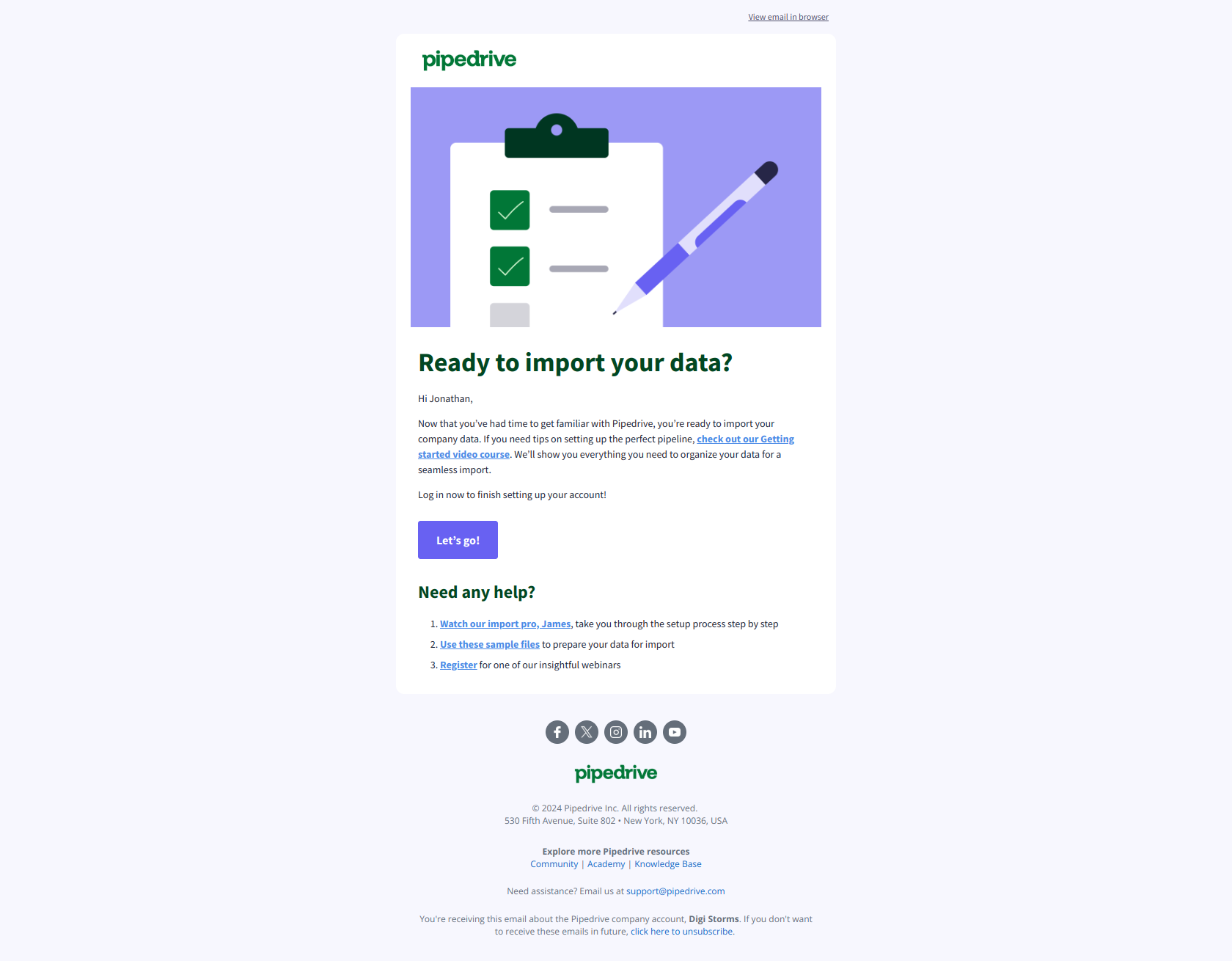
Subject line: Important: Your setup is not complete
Pipedrive names the friction point — incompleteness — instead of dangling a feature. By labeling the gap “Important,” inaction reframes from “an optional feature I haven’t explored” into “an open loop I should close.” For a trial user who stalled mid-onboarding, that’s exactly the right pressure: not the whole product, just the next unfinished step.
The pattern: frame the gap, not the tool. When a trial user has started but stalled, point at the specific incomplete step and make finishing it feel like resolving a problem, not learning a feature.
Phantombuster — “Jonathan didn’t you sign up to grow your business faster?”
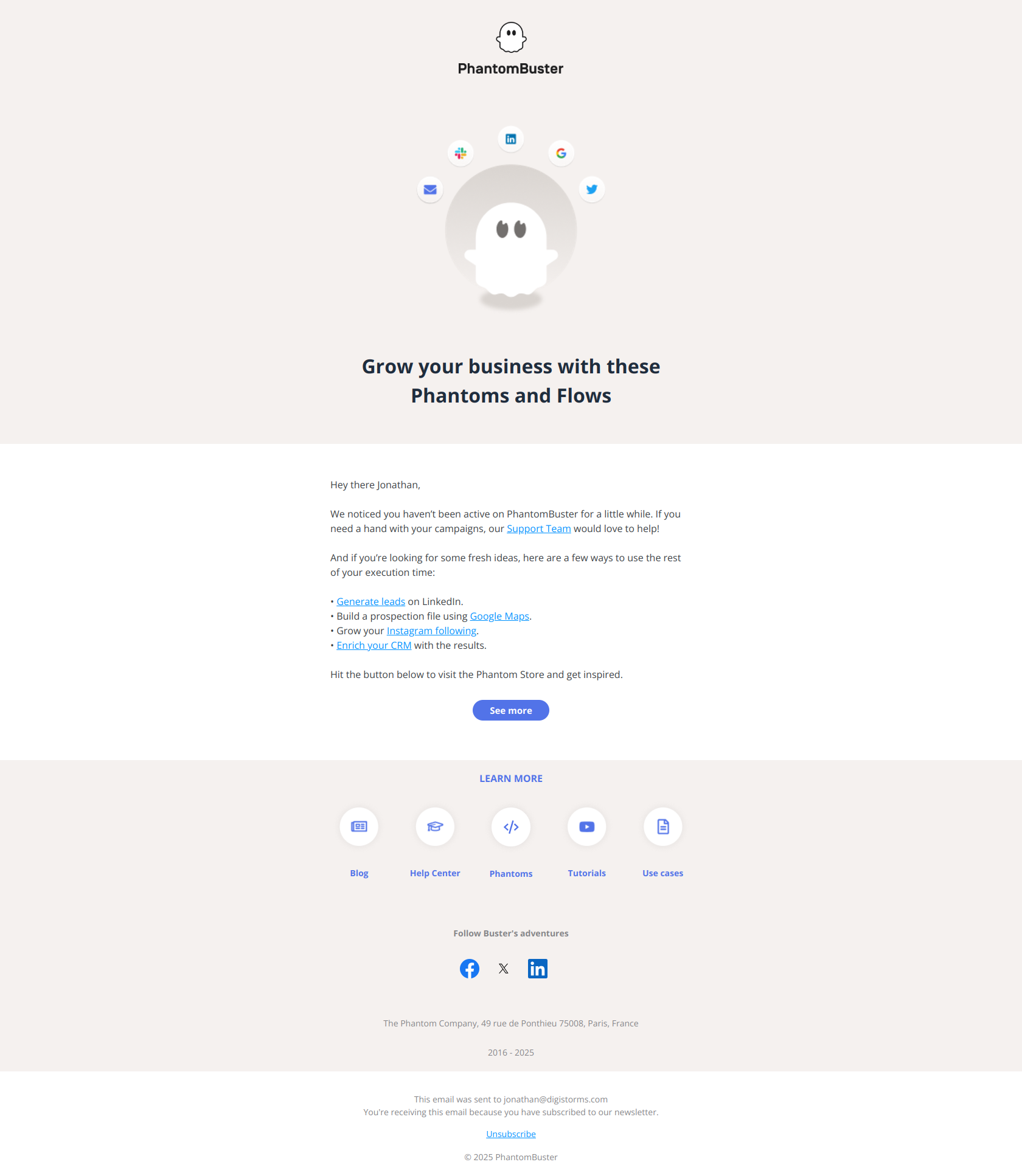
Subject line: Jonathan didn’t you sign up to grow your business faster?
Phantombuster reaches past the product and back to the user’s original intent — the job they hired the trial to do. Personalizing with a first name and invoking “grow your business faster” makes the stall feel like a personal lapse against the user’s own goal, not a failure of the software to be interesting.
The pattern: reframe drop-off as unfulfilled intent. Remind the trial user what they wanted when they signed up — the outcome, not the feature set — and the stalled session starts to feel like unfinished business.
Apollo — “Did we lose you?”

Subject line: Did we lose you?
Three words, no urgency, no discount. Apollo signals abandonment without blame, forcing the quiet trial user to mentally answer a direct question instead of skimming past a generic re-engagement pitch. It’s the lowest-friction subject line in the playbook because it sounds like a person checking in, not a brand demanding a click.
The pattern: ask a question that presumes a relationship. For a user who’s already experienced a little value, a sincere “did we lose you?” triggers more curiosity and mild social obligation than any “come back and upgrade” CTA.
Stage 2 — Rebuild mid-trial momentum
The user activated, then drifted. They’ve seen some value but haven’t built the habit — and the trial clock is now working against them. These emails reconnect effort to payoff before the deadline panic sets in.
Aircall — “Jonathan, here’s the ROI you can expect with Aircall”
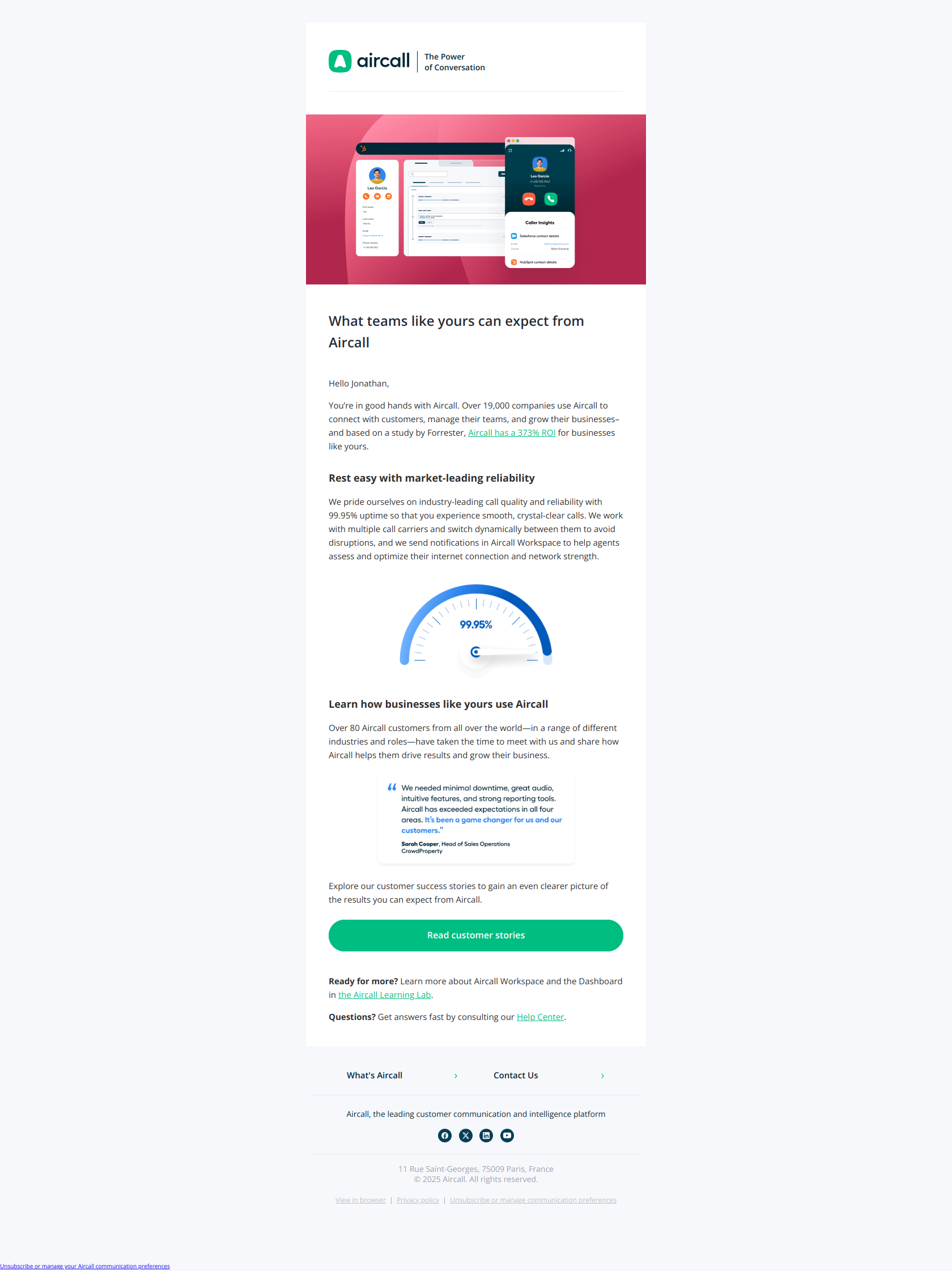
Subject line: Jonathan, here’s the ROI you can expect with Aircall
Mid-trial, the open question in a stalled user’s head isn’t “what does this do?” — it’s “is this worth paying for?” Aircall leads with the answer: the return they can expect. That flips the mental model from feature evaluation to outcome justification, giving the user permission to believe the tool will pay for itself before the trial ends.
The pattern: outcome before offer. Mid-trial recovery emails work when they give a wavering user a concrete reason to believe the upgrade earns its price — ROI, time saved, results — rather than reciting more features.
Jira — ”⏳ You’re halfway through your Premium trial”
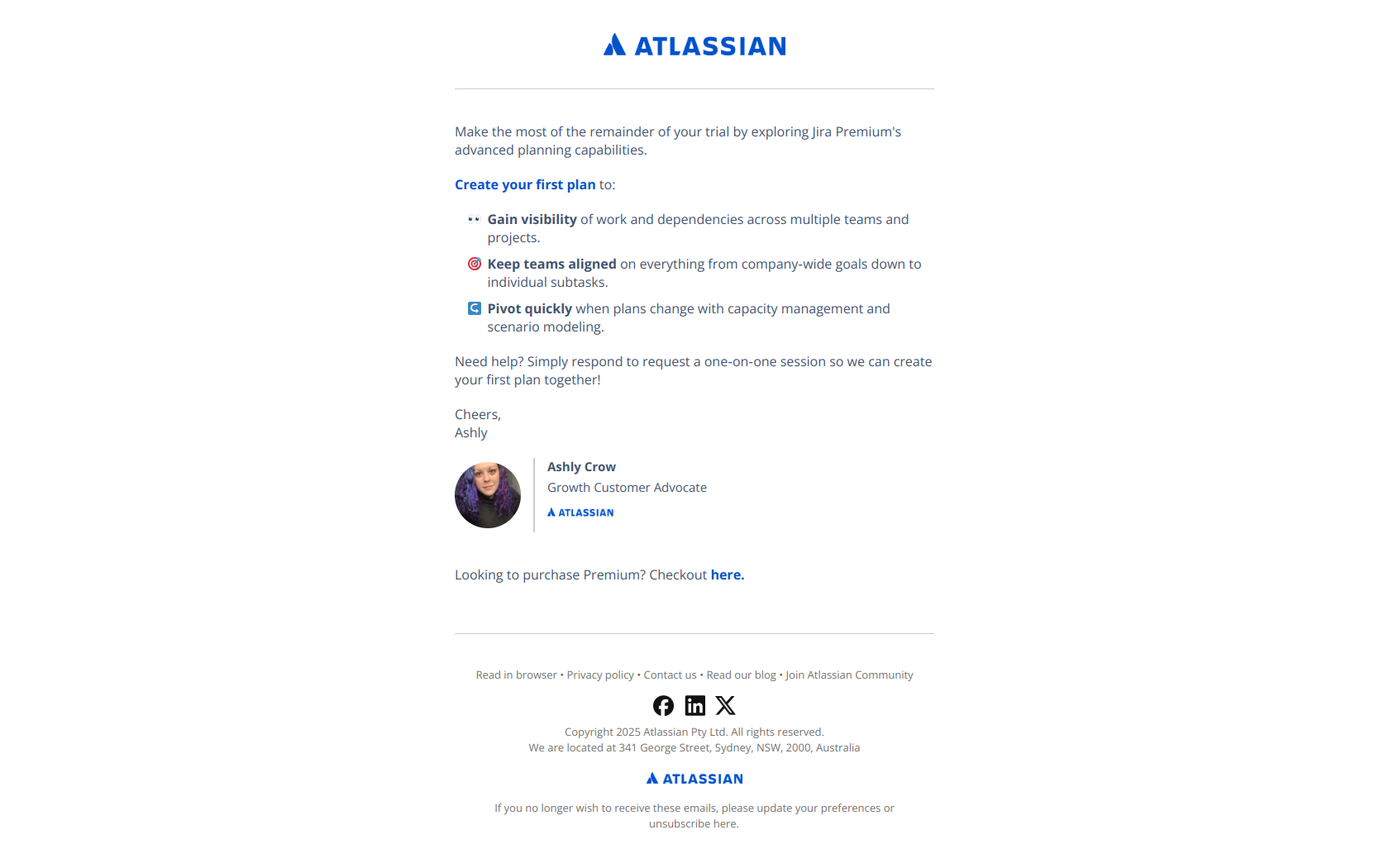
Subject line: ⏳ You’re halfway through your Premium trial
Jira introduces the clock without sounding desperate. “Halfway through” is a neutral status update that quietly creates scarcity — the reader opens to find out exactly how much window is left and what they should do with it. It’s a momentum checkpoint, perfectly timed before the user forgets the trial exists at all.
The pattern: scarcity before features. A mid-trial “you’re halfway there” surfaces the deadline gently, prompting action while there’s still enough runway left to build a real habit and reach the conversion-worthy moment.
Stage 3 — Warn before expiration
The final days. The trial is about to lapse, and this is the last natural decision point. The strongest expiration emails don’t all reach for the same lever — some use the deadline, some use progress, some offer help.
Loom — “Only 3 days left on your free trial of Loom Business”
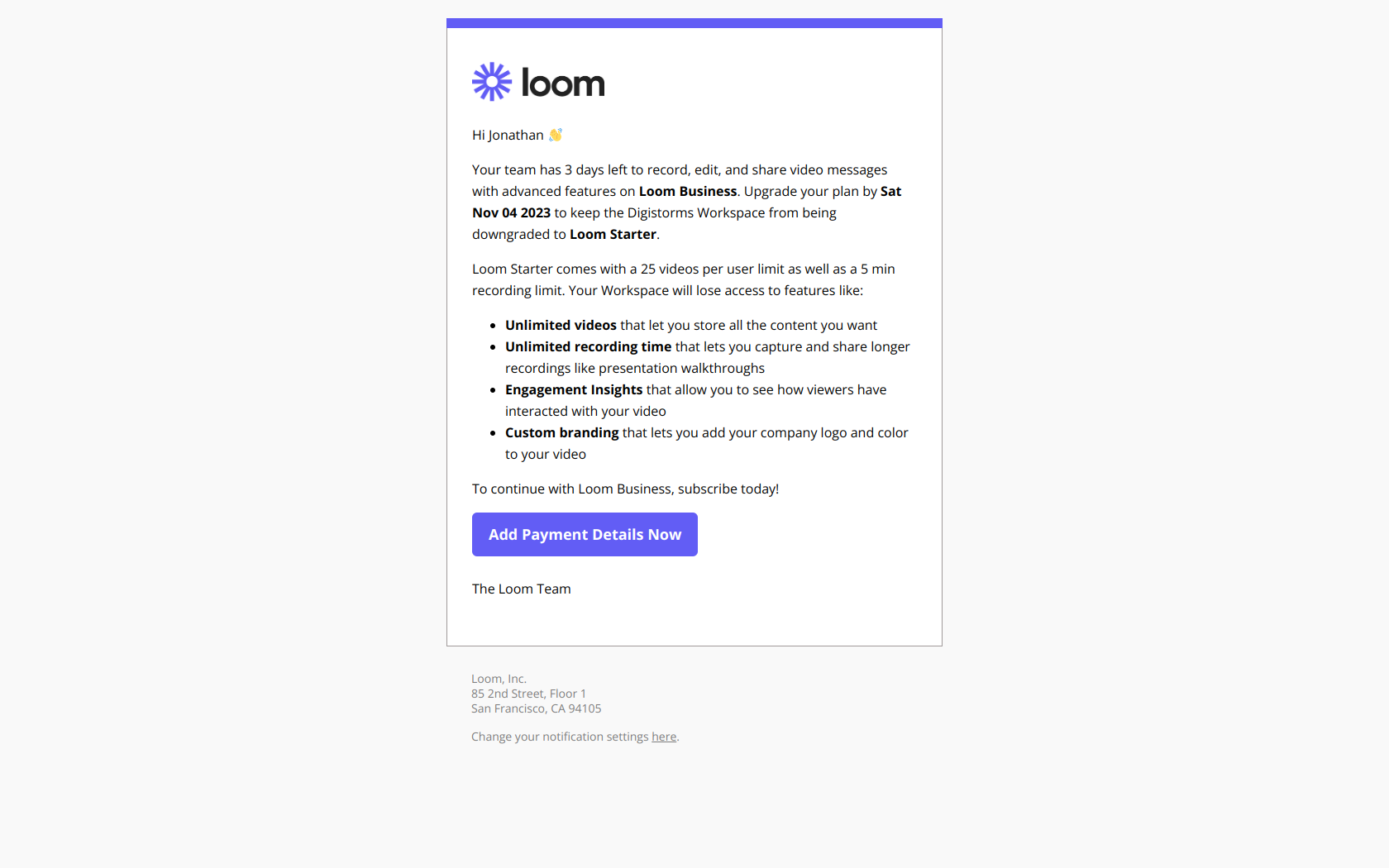
Subject line: Only 3 days left on your free trial of Loom Business
Loom leads with the countdown, not the plan. A user can skim straight past “upgrade to Business,” but “only 3 days left” lands before cognitive resistance kicks in — the deadline forces attention while there’s still time to act. It’s the classic urgency play, and it works because the scarcity is real and specific.
The pattern: deadline before benefit. When the trial is genuinely about to end, lead with the countdown so the reader registers the time pressure before they rationalize putting the decision off again.
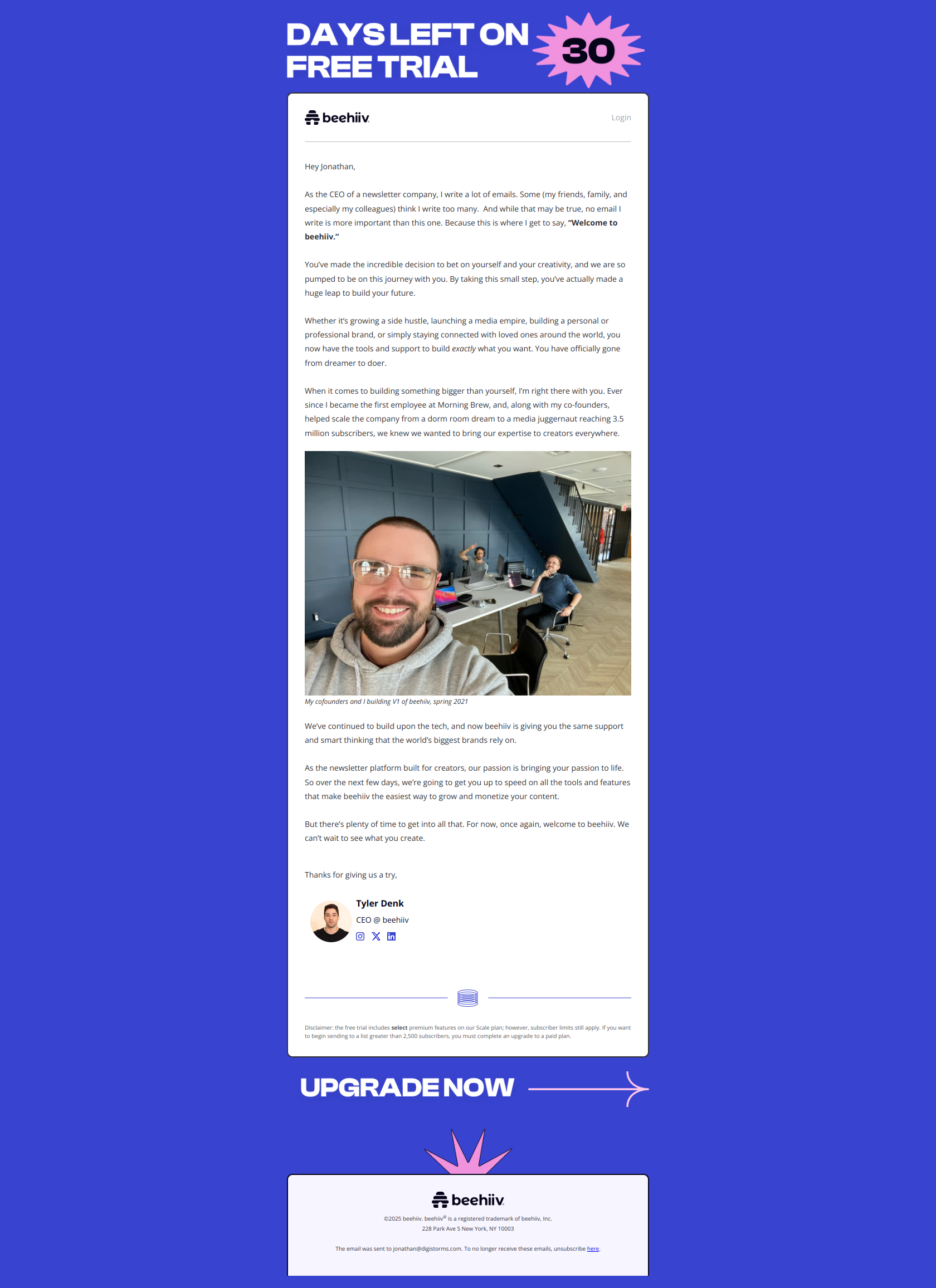
Calendly — “You’ve accomplished so much!”
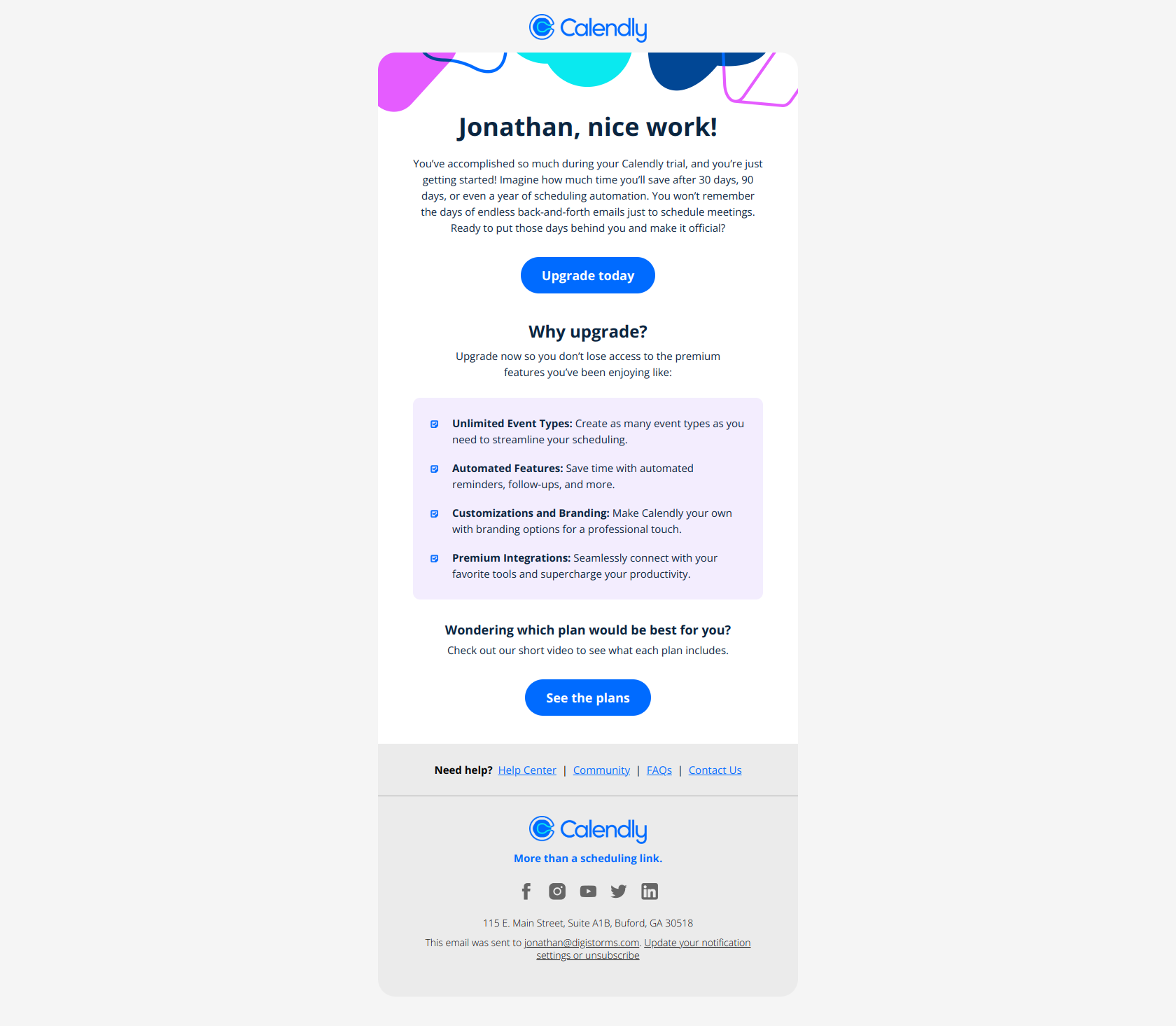
Subject line: You’ve accomplished so much!
Calendly takes the opposite approach to Loom — instead of a threat, it opens with a celebration. By reframing expiration as a milestone recap of everything the user built during the trial, it invites them to open out of positive momentum, then positions paying as the natural next chapter rather than a panic purchase.
The pattern: anchor the upgrade to progress, not scarcity. When a trial user has generated real activity, recap what they’ve accomplished so premium feels like protecting their momentum — not beating a deadline.
Asana — “Your trial is almost over—let us help”
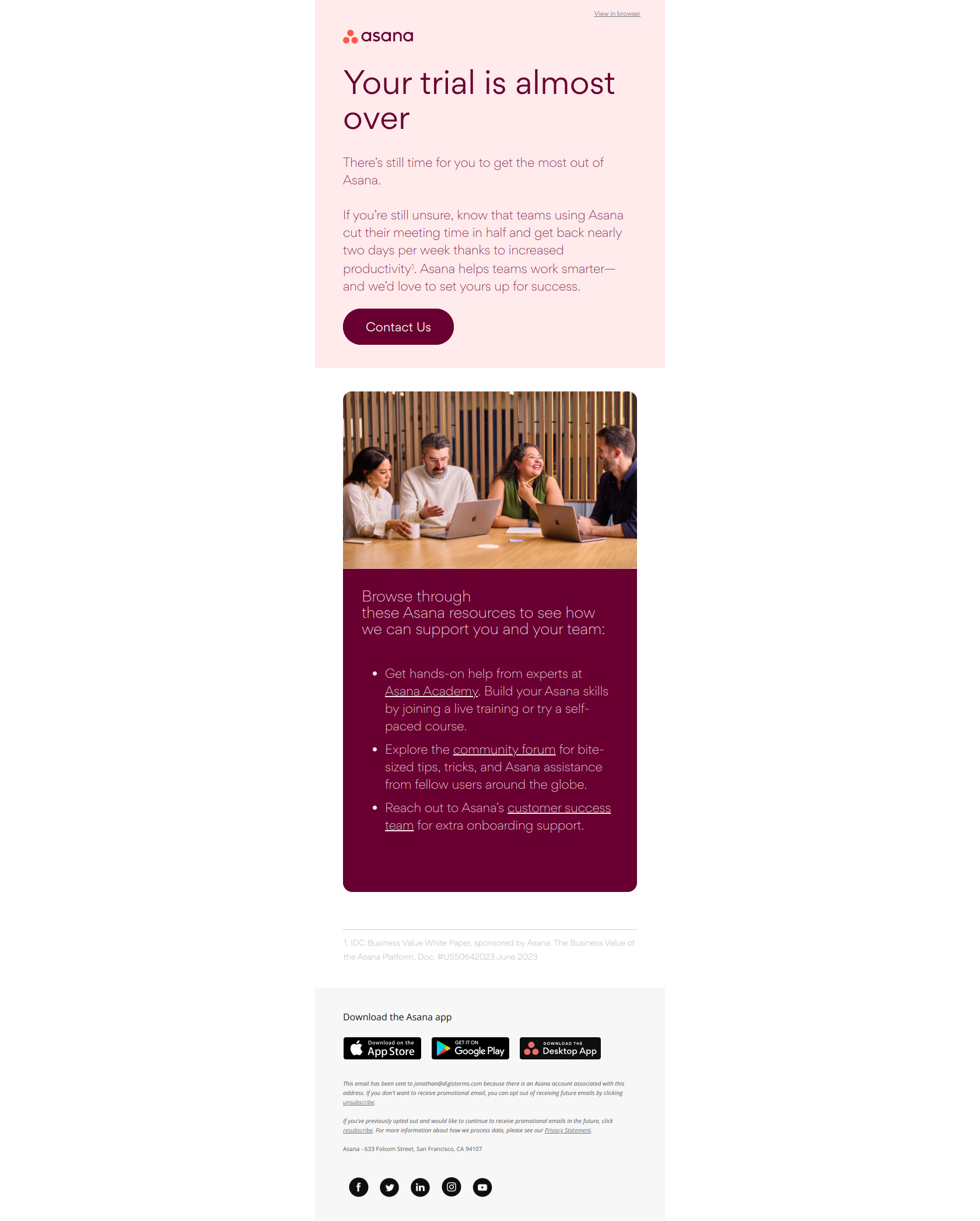
Subject line: Your trial is almost over—let us help
Asana reframes the deadline as a problem they can solve. “Let us help” shifts the reader’s mental model from “I’m running out of time” to “I’m missing support I need” — which routes the user toward a conversation (a demo, a call, hands-on guidance) instead of letting them silently let the trial lapse.
The pattern: reframe friction as helplessness, then offer a hand. For a stalled trial that’s almost up, an offer of help converts users who wouldn’t upgrade on their own but will say yes to a guided next step.
Stage 4 — Offer an extension as a safety net
The trial ended (or is about to) and the user still hasn’t decided. Rather than letting the relationship snap shut, the best brands hand back time — and frame it as a gift, not a last-chance ultimatum.
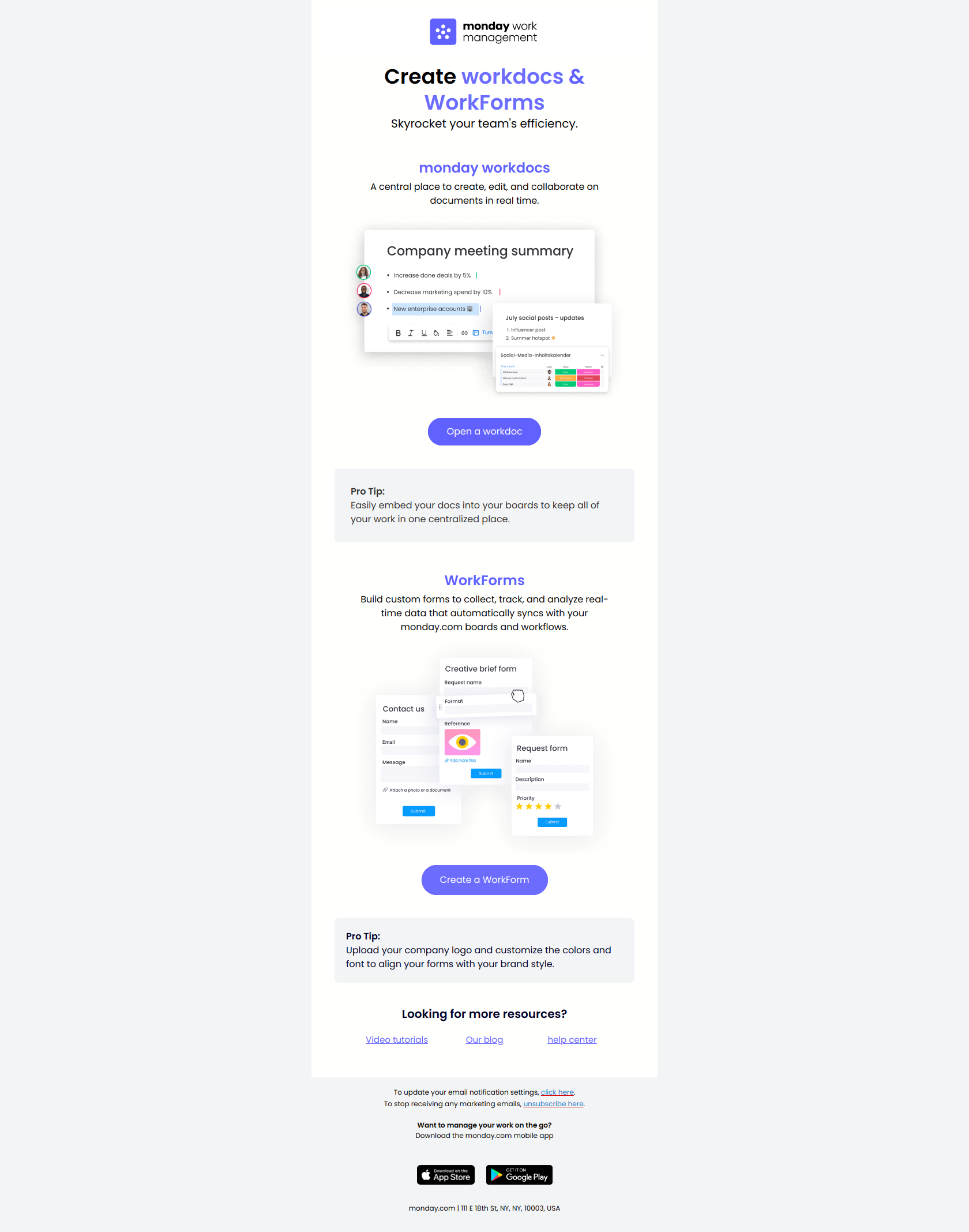
Monday — “One more week of monday.com, on us”
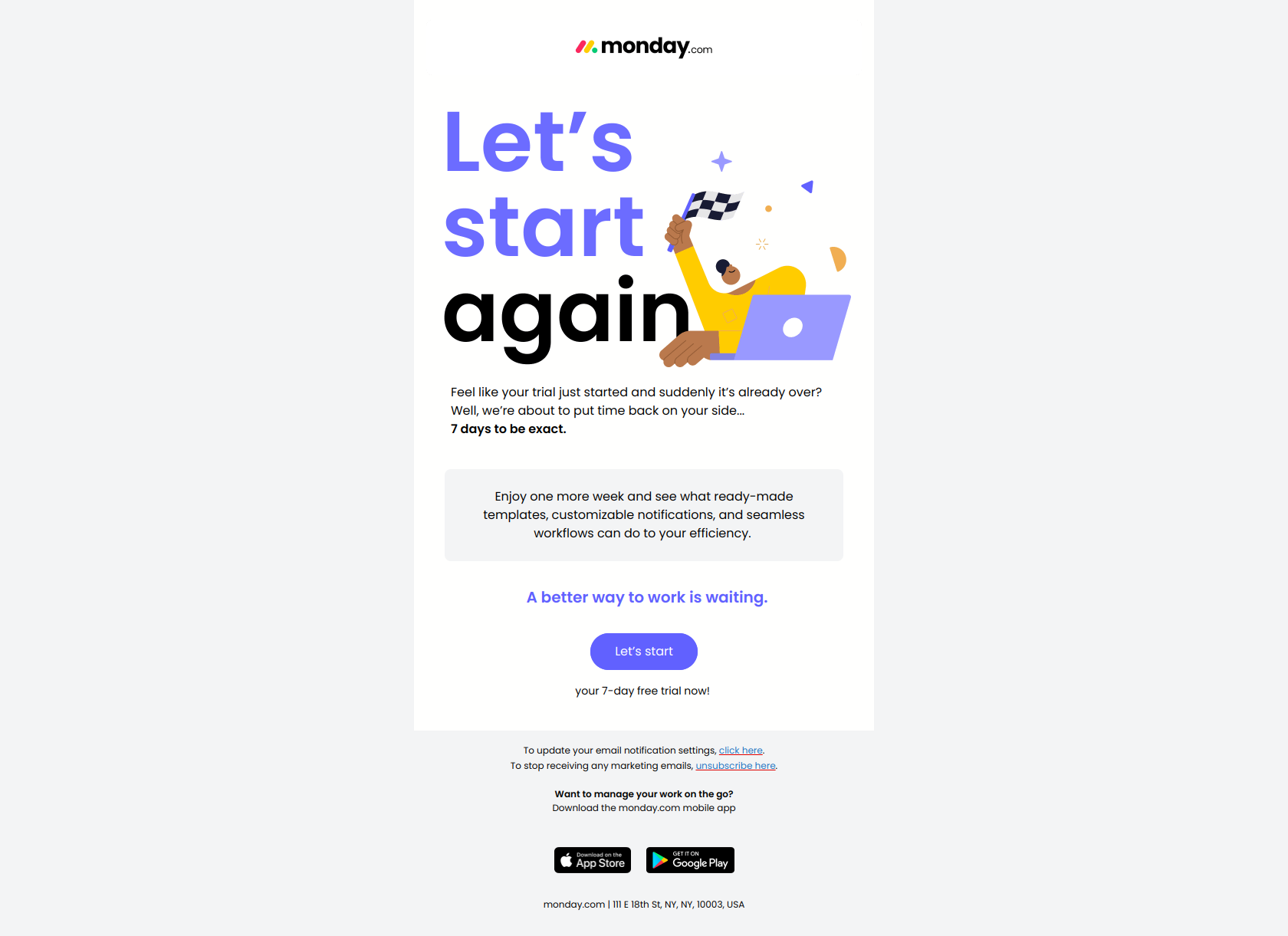
Subject line: One more week of monday.com, on us
Monday frames the extension as a gift — “on us” — rather than a desperate re-engagement plea. That subtle inversion resets the emotional frame from “we’re losing you” to “we’re giving you more time,” so a wavering user feels valued instead of pressured. It buys the trial another week to reach the moment that justifies paying.
The pattern: reframe the extension as generosity. An extra week offered as a gift lands far better than the same week offered as a last-chance ultimatum — the user re-enters the trial feeling rewarded, not cornered.
Jira — “You’ve got extra time to keep your plan”
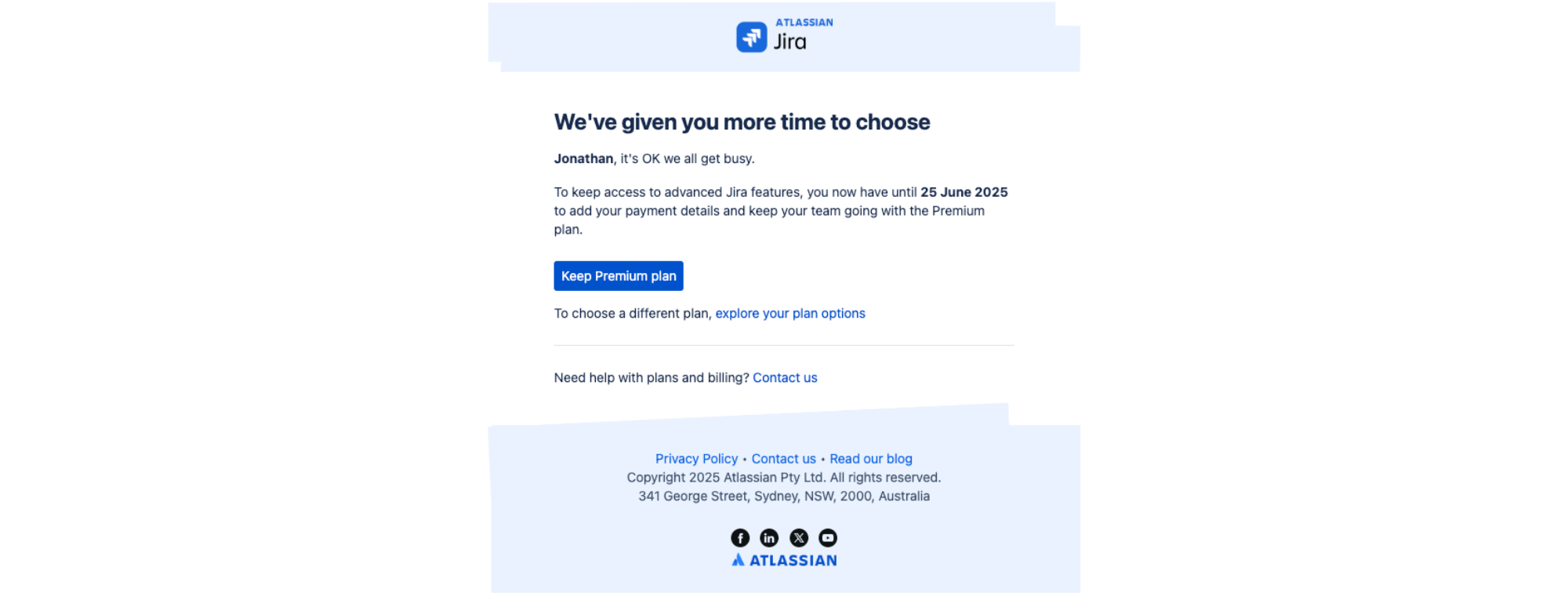
Subject line: You’ve got extra time to keep your plan
Jira turns a payment deadline into a gift. “You’ve got extra time” names the benefit to the user rather than the ask of the user, shifting the emotional response from avoidance to gratitude. For a trial about to convert to a paid plan, that reframe is often the difference between an action taken and a message ignored.
The pattern: name the benefit to the user, not the ask. Whenever you need someone to complete a friction task before churn — extend, upgrade, update billing — lead with what they gain from the extra runway, not what you need from them.
The trial drop-off recovery sequence
Map each email to the moment the trial actually went quiet — the stage, not just the calendar day:
| Stage | When it fires | The job of the email | Lever |
|---|---|---|---|
| 1. Stalled setup | Signed up, never activated | Get them to finish the next step | Frame the gap; recall original intent; ask “did we lose you?“ |
| 2. Mid-trial drift | Activated, then went quiet | Reconnect effort to payoff | ROI / outcome; gentle “you’re halfway” scarcity |
| 3. Expiration warning | Final days of the trial | Force the decision | Countdown; progress recap; offer of help |
| 4. Extension offer | Lapsed or about to | Keep the door open | Reframe extra time as a gift, not an ultimatum |
A few patterns hold across every stage:
- Diagnose before you send. The single biggest lever is matching the email to why the user stalled. A setup-stage drop-off and an expiration-stage drop-off need opposite messages.
- Name the user’s gain, not yours. “Your setup isn’t complete,” “ROI you can expect,” “one more week on us” all center the user’s benefit. “Upgrade now” centers yours.
- Vary the lever as the deadline nears. Lead with intent and curiosity early; with deadlines and help offers late; with generosity once time has run out.
Want to study the full sequences these brands actually send? Browse the free DigiStorms email library — every screenshot above links to the real email, complete with subject line, timing, and teardown. Pair this with the re-engagement playbook and free-to-paid conversion emails to cover the entire trial-to-paid window.